


News
08 June 2026 |News
ILO ESAP 3: Albanian institutions strengthen Open-Source Intelligence capacities for smarter enforcement
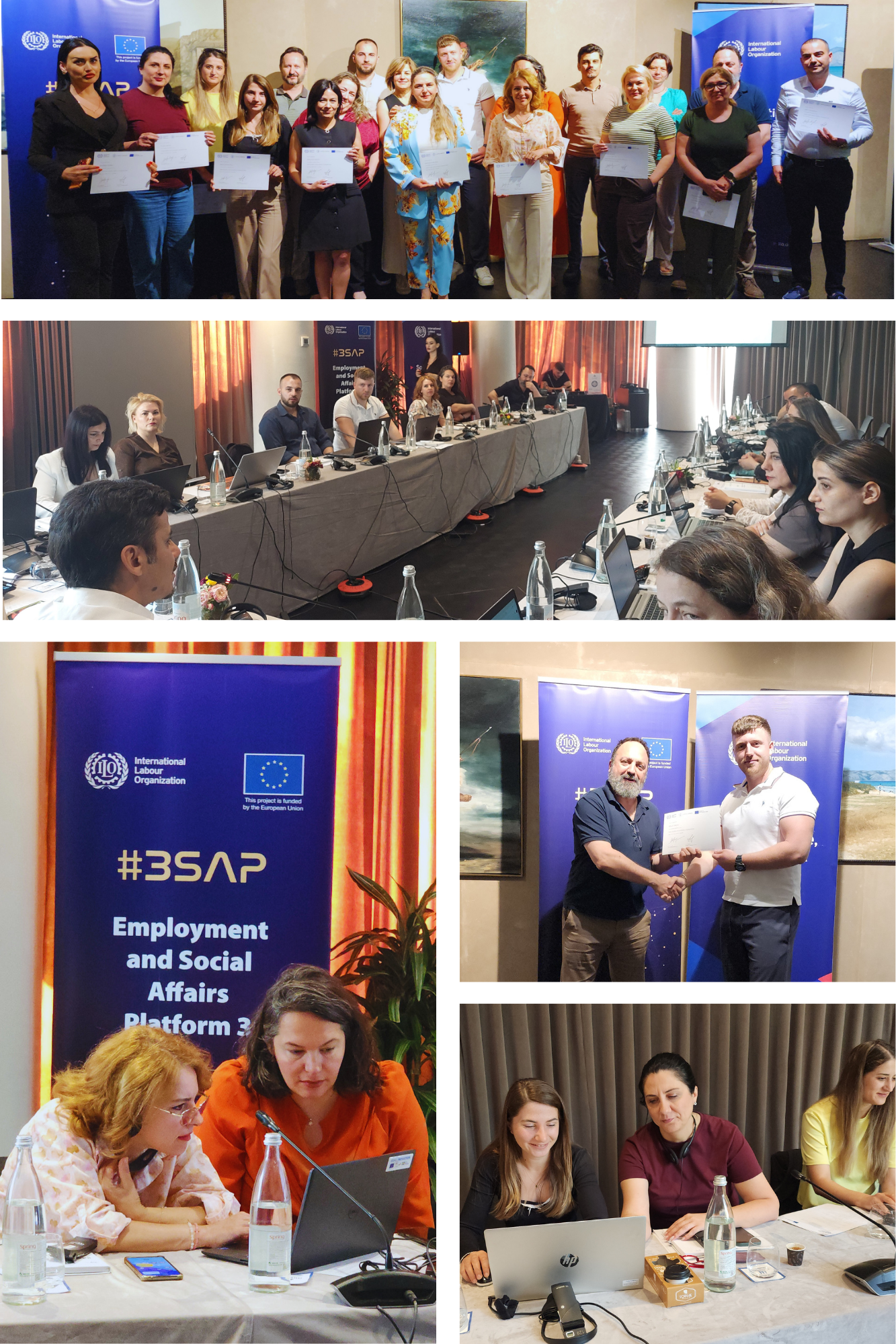
ILO Open-Source Intelligence Training, 3-5 June 2026 Albania
Tirana, Albania – June 2026. From 3–5 June 2026, representatives of Albanian policy-making, inspection, enforcement and data institutions took part in a three-day training on Open Source Intelligence (OSINT), organized with the support of the International Labour Organization (ILO) through the EU-funded Employment and Social Affairs Platform 3 (ESAP 3) project.
The training brought together 18 participants, including 14 women, from the State Labour Inspectorate and Social Services, the Ministry of Economy and Innovation, the General Directorate of Taxes, the General Inspectorate, the National Statistics Office – INSTAT, and the National Agency for Information Society. The cross-institutional format reflected the importance of cooperation between analysts, inspectors, policy makers and data professionals in strengthening evidence-based enforcement.
The course focused on practical ways to use publicly available information to support better planning, risk targeting and decision-making in inspection and enforcement work. Based on the “Lean Intelligence” approach, participants explored how open-source information can help reduce uncertainty, identify relevant signals, and turn scattered data into intelligence that is structured, documented and usable.
The first day focused on the foundations of intelligence work. Participants examined the difference between information that is publicly available and information that is genuinely accessible, taking into account language, search limitations, platform design, ethical considerations and legal boundaries. They also practiced translating broad enforcement challenges, such as monitoring undeclared work, into clear intelligence needs, structured questions and collection plans.
Operational security was another important part of the programme. Participants reviewed how digital footprints are created, how online searches can expose users or institutions, and how to manage privacy and security while carrying out OSINT tasks responsibly.
The second day focused on monitoring the information environment. Participants worked with RSS feeds, aggregators, keyword alerts, multilingual searches and AI-supported processing tools to build more systematic “push” collection workflows. These methods can help institutions follow relevant developments across news outlets, blogs, newsletters and other online sources, while reducing information noise and improving early detection of emerging risks.
The training also supported participants in developing a more representative media map, including local and national sources, broadcasters, online portals, directories and sources with different editorial perspectives. This approach can help institutions move from reactive searching to more proactive monitoring of labour market, compliance and enforcement-related developments.
On the final day, participants strengthened their web search and social media intelligence skills. They practiced using search operators, retrieving different file formats, comparing traditional search methods with AI-based tools, and assessing when results are reliable or potentially misleading. Sessions on SOCMINT introduced practical ways to monitor social platforms, channels, forums and multimedia sources while documenting methods and respecting platform constraints.
The programme concluded with a focus on data management and usable outputs. Participants discussed how OSINT findings can be recorded, checked, validated and shared in ways that support institutional action. The training underlined that open-source information becomes intelligence only when it is collected with purpose, assessed critically, and transformed into products that decision-makers and enforcement teams can use.
By strengthening practical OSINT skills, the training contributed to ESAP 3 efforts to support fair and well-functioning labour markets in the Western Balkans, including through improved employment formalisation, stronger inspection capacities and better evidence-based enforcement.