


News
08 May 2026 |News
RCC ESAP 3: Socio-economic inclusion of vulnerable groups in the Western Balkans Six faces challenges despite recent progress in policy implementation
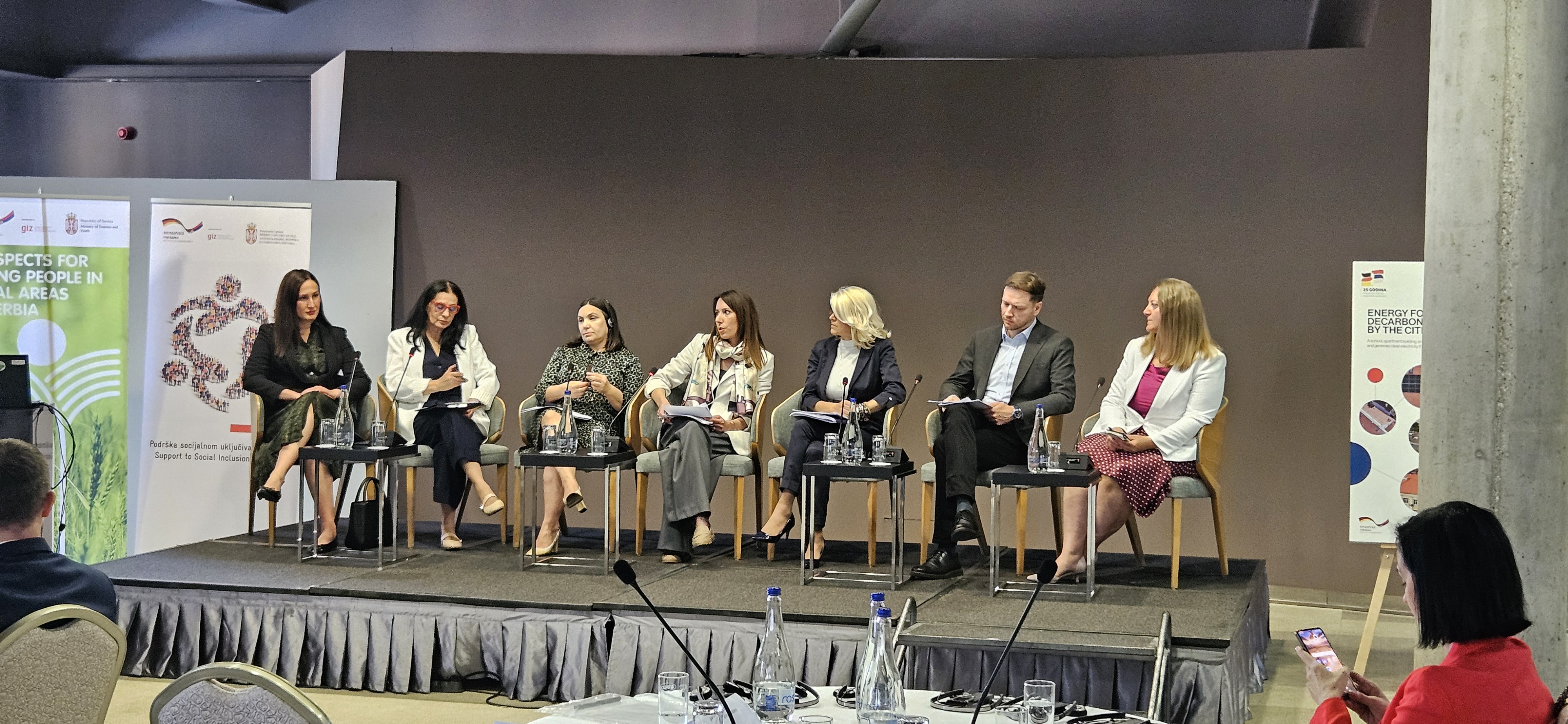
GIZ Regional Conference on the Socio-Economic Inclusion of Vulnerable Groups in the Western Balkans, Belgrade, Serbia 6-7 May 2026 (Photo: GIZ Serbia)
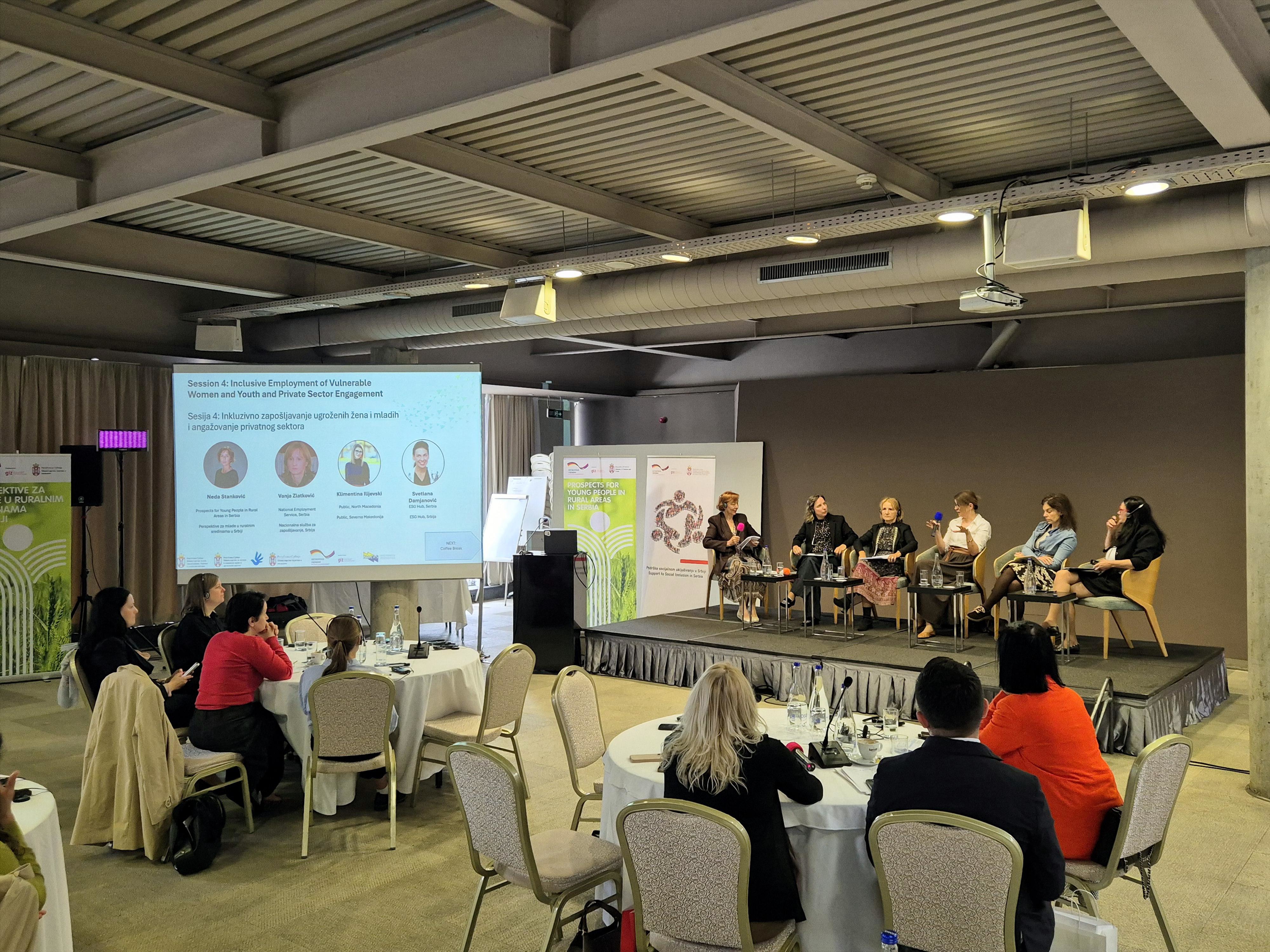
GIZ Regional Conference on the Socio-Economic Inclusion of Vulnerable Groups in the Western Balkans, Belgrade, Serbia 6-7 May 2026 (Photo: RCC ESAP 3)
Employment and Social Affairs Platform 3 (ESAP 3) project of the Regional Cooperation Council (RCC) presented key findings from Performance of the Western Balkans Six regarding the European Pillar of Social Rights (EPSR; 2025 review) at the Regional Conference on the Socio-Economic Inclusion of Vulnerable Groups in the Western Balkans, organized by GIZ
Belgrade, Serbia, 6-7 May, 2026 – Employment and Social Affairs Platform (ESAP 3) project of the Regional Cooperation Council (RCC) attended the Regional Conference on the Socio-Economic Inclusion of Vulnerable Groups in the Western Balkans that was held in Belgrade, Serbia on 6-7 May, 2026. The conference was organized by German International Cooperation Projects: „Support to Social Inclusion in Serbia”, „Prospects for Young People in Rural Areas in Serbia”, and „Advancing Socioeconomic Participation in Municipalities in the Western Balkans”.
RCC’s ESAP 3 took part in the Conference by presenting the key findings of the 2025 review on the performance of the Western Balkans Six (WB6) regarding the European Pillar of Social Rights (EPSR). ESAP 3 Policy advisor, Boban Gledovic, participated as panelist in Session 1 Advancing Socio-Economic Inclusion in the Framework of EU Integration. Gledovic highlighted that 2025 regional review showed that the WB6 has strengthened policy frameworks on social inclusion, employment and equal opportunities, but implementation remains uneven. Despite record unemployment rates across WB6 and steady growth of employment rate, WB6 still faces challenges such as high youth unemployment and NEET (youth not in employment, education or training) rates, gender employment gap, disability employment gap, long-term unemployment, high informality, low level of investment in healthcare across WB6 etc. In addition, 2025 review highlighted progress regarding labour inspection cooperation, more transparent public employment services and greater engagement with social partners and alignment with EU employment principles.
The aim of the Conference was to improve the position of women, youth, and vulnerable groups through joint efforts, in line with the European path of the WB6.The two-day event consisted of various sessions that provided insight and discussion on the following topics: strengthening local mechanisms for socio-economic inclusion; just and social municipalities; inclusive employment of vulnerable women and youth and private sector engagement; local governments and civil society organisations as drivers of EU Accession - opportunities and perspectives.
The Conference highlighted importance of regional and local cooperation as main tools for advancing socio-economic inclusion of vulnerable groups in WB6, with conclusion that further efforts in this area are needed across WB6, despite recent progress made in policy implementation.
The two-day conference brought together more than 80 key stakeholders from the region, including representatives from the EU delegation to Serbia, international organisations, relevant ministries, local self-governments and civil society.