



News
11 November 2026 |News
Public Employment Services from Western Balkans Six Strengthen Cooperation with European Peers at 2026 EU PES Network Stakeholder Conference
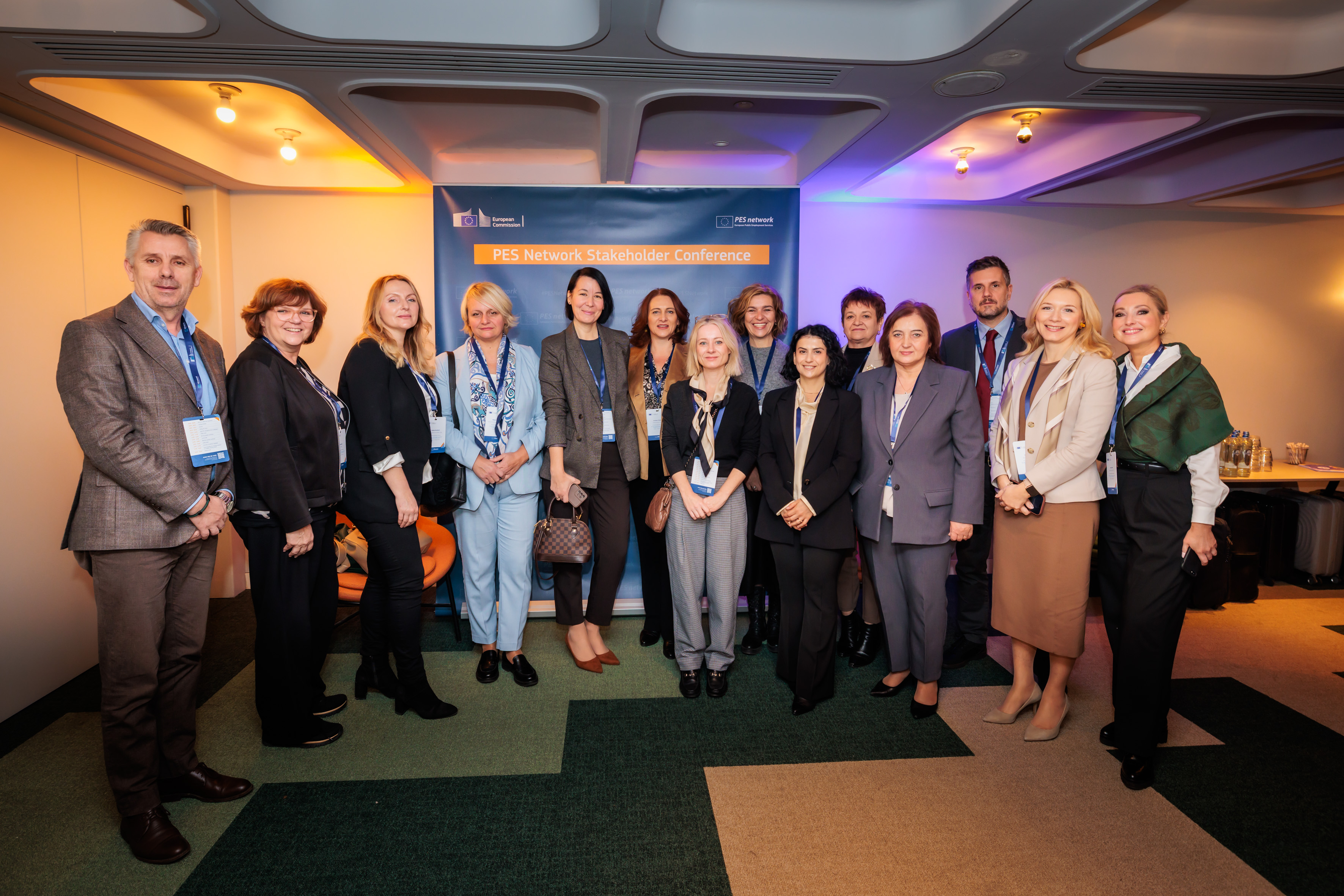
RCC ESAP 3: Representatives of the public employment services (PES) from Western Balkan Six and colleagues at the 2026 EU PES Network Stakeholder Conference (Photo: ESAP 3)

RCC ESAP 3: Working session at the 2026 EU PES Network Stakeholder Conference (Photo: ESAP 3)
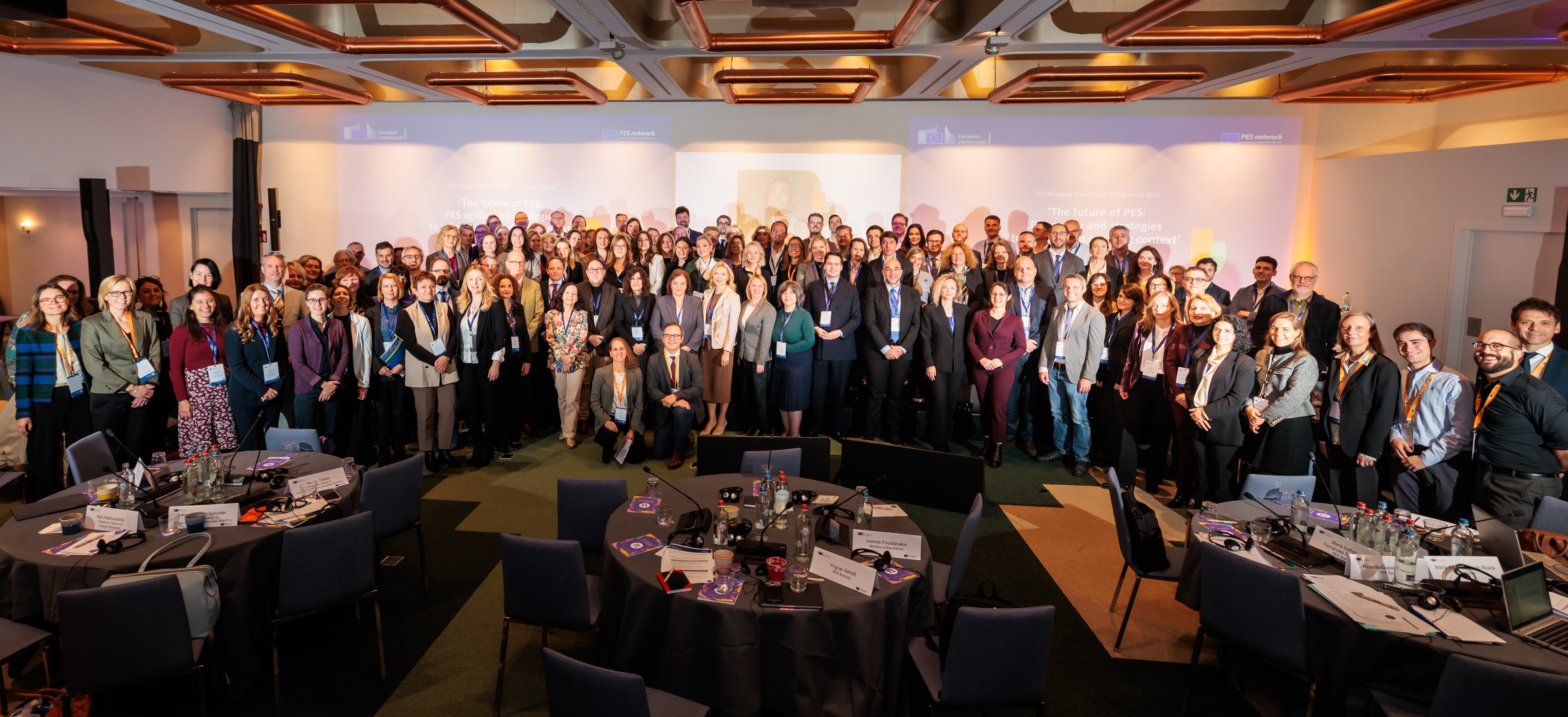
RCC ESAP 3: Group photo of the participants at the 2026 EU PES Network Stakeholder Conference (Photo: EU PES Network)
Through ESAP 3, the RCC continues to facilitate the engagement of WB6 PES in European-level exchanges and peer learning, supporting closer cooperation and alignment with EU approaches
Representatives of the Western Balkans Six (WB6) Public Employment Services (PES), supported by the Regional Cooperation Council’s (RCC) Employment and Social Affairs Platform 3 (ESAP 3), participated in the 2026 PES Network Stakeholder Conference, entitled The Future of PES: Agility and Strategies for an Evolving Context, held in Brussels, Belgium, on 10 November 2026.
The Conference brought together around 150 participants from the European Network of Public Employment Services (PES Network), PES from EU enlargement partners, European Commission, social partners, private employment services, third-sector organisations, EU agencies and other European networks. It provided a platform for discussing how public employment services can adapt their strategies and services to rapidly changing labour market conditions.
The Conference focused on the evolving strategic role and core mission of PES, their capacity to anticipate labour market developments through data, forecasting and labour market intelligence, and ways to improve the effectiveness and efficiency of service delivery. Discussions also addressed how PES can strengthen partnerships, make effective use of digital tools and provide more targeted support to different groups.
Two rounds of parallel workshops offered participants an opportunity to explore these issues in greater depth. The morning session, Evolution of PES Strategy to Be Ready for the Future Labour Market, addressed the delivery of the PES core mission, anticipating labour market transitions through data and skills intelligence, supporting fair labour mobility, and strengthening cooperation across employment service ecosystems.
The afternoon session, Operationalising Efficiency of PES Delivery in the Future, focused on human-centred services in a digital world, the workforce of the future, reaching vulnerable groups, and the early prevention of unemployment and management of job-to-job transitions. The workshops provided space to exchange experiences, discuss innovative approaches and identify lessons that could inform the further development of PES strategies and operations.
The Conference also took place at an important moment for the PES Network, which is undergoing an evaluation of the implementation of the PES Network Decision, with a view to considering the possible extension of enhanced cooperation between public employment services beyond 2027. Participants also discussed relevant EU policy developments, including the recently adopted Anti-Poverty Strategy and the forthcoming Fair Labour Mobility Package.
Ahead of the Conference, on 9 November, WB6 PES representatives attended a pre-conference networking event hosted by Chair of the EU PES Network Ms Vanessa Ahuja, on behalf of the EU PES Network. The gathering provided an informal opportunity for PES representatives from both EU and WB6 to connect and exchange views and explore cooperation opportunities ahead of the main event.
In her welcoming remarks to representatives of PES from EU enlargement partners, Ahuja emphasised the importance of bringing together employment services from across Europe. She highlighted the value of exchanges, mutual learning and exposure to the experiences of peers and partners, noting that cooperation and the sharing of practical approaches are particularly important as PES respond to increasingly complex labour market challenges. She added that PES need to remain agile, forward-looking and responsive to the needs of jobseekers, employers and society.
Participation in the Conference enabled WB6 PES representatives to engage with their European counterparts, gain insights into emerging practices and approaches, and strengthen links with the wider European PES community. It also offered an opportunity to bring regional perspectives into discussions on the future of public employment services and the challenges facing labour markets across Europe.
Through ESAP 3, the RCC continues to support WB6 PES in strengthening their institutional and operational capacities, promoting regional cooperation and peer learning, and fostering closer alignment with EU employment policies and practices.