


News
29 April 2026 |News
ILO ESAP 3: From Accident Investigation to Prevention: Labour Inspectors Strengthen OSH Capacities in the Western Balkans
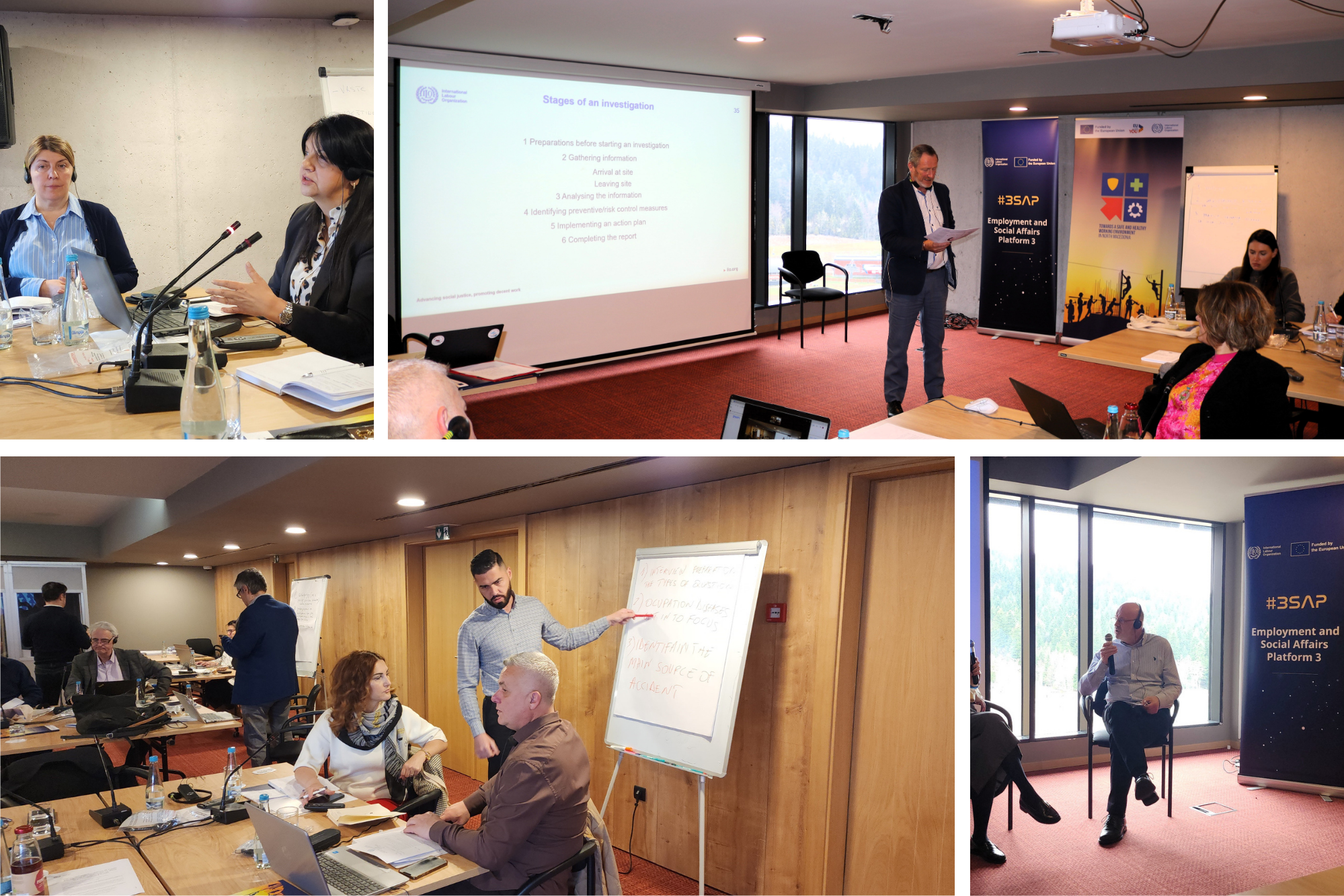
©ILO Regional Training of Labour Inspectors about Investigation of Work Accidents, Bjelašnica, BiH, 21–23 April 2026
Bjelašnica, Sarajevo, 21–23 April 2026 — A workplace accident rarely begins when something goes wrong. A fall from a scaffold, a hand caught in a machine, an electric shock or an occupational disease diagnosed after years of exposure each has a visible moment, but also a longer story. It is a story about Occupational and Health (OSH) management system, work organization, training, supervision, equipment, communication, risk assessment and missed opportunities for prevention.
This was the focus of a three-day regional training on accident investigation and risk assessment, organized by the International Labour Organization (ILO) within the framework of the European Union-funded Employment and Social Affairs Platform (ESAP) 3 and national projects Towards a safe and healthy working environment in North Macedonia and Promotion of occupational safety and health and labour inspection in Serbia. The training brought together 17 labour inspectors, including 10 women, from Albania, Bosnia and Herzegovina, Montenegro, North Macedonia and Serbia, strengthening regional capacities to investigate work accidents and use findings to prevent future harm.
The training moved from international labour standards and OSH principles to the practical reality of inspection work. Participants examined what happens when an inspector arrives at an accident site, speaks with an injured worker or witness, reviews equipment and documents, reconstructs events and determines what must change. Through practical exercises, inspectors were encouraged to look beyond the immediate cause of an accident and identify underlying and root causes, such as inadequate training, unsafe systems of work, poor supervision, missing safeguards or ineffective risk assessment.
A strong focus was placed on the worker’s, employer’s and inspector’s perspectives. For workers, a good investigation means being heard without blame and ensuring that their experience helps protect others. For employers, it provides a clearer picture of what failed in the OSH management system and what must be corrected. The training also emphasized that employers have a primary role in prevention through proper workplace risk assessments. These assessments should identify hazards, determine who may be harmed and how, assess whether existing controls are sufficient, and introduce additional measures where needed. When carried out seriously and updated regularly, risk assessments help employers address dangers before they result in injury, disease or death.
By the end of the workshop, participants had followed the full path from accident scene to prevention: notification, interviewing, evidence gathering, analysis, reporting, action planning and risk control. Through ESAP 3, the ILO and the EU continue to support labour inspectorates in the Western Balkans to strengthen occupational safety and health systems, improve compliance and help prevent the next accident before it happens.
For more information check the following article on LinkedIn: From the accident scene to prevention: labour inspectors from the Western Balkans strengthen skills in investigating work accidents .