


News
02 April 2026 |News
ILO ESAP 3: Albania advances dialogue on social protection for seasonal workers in tourism
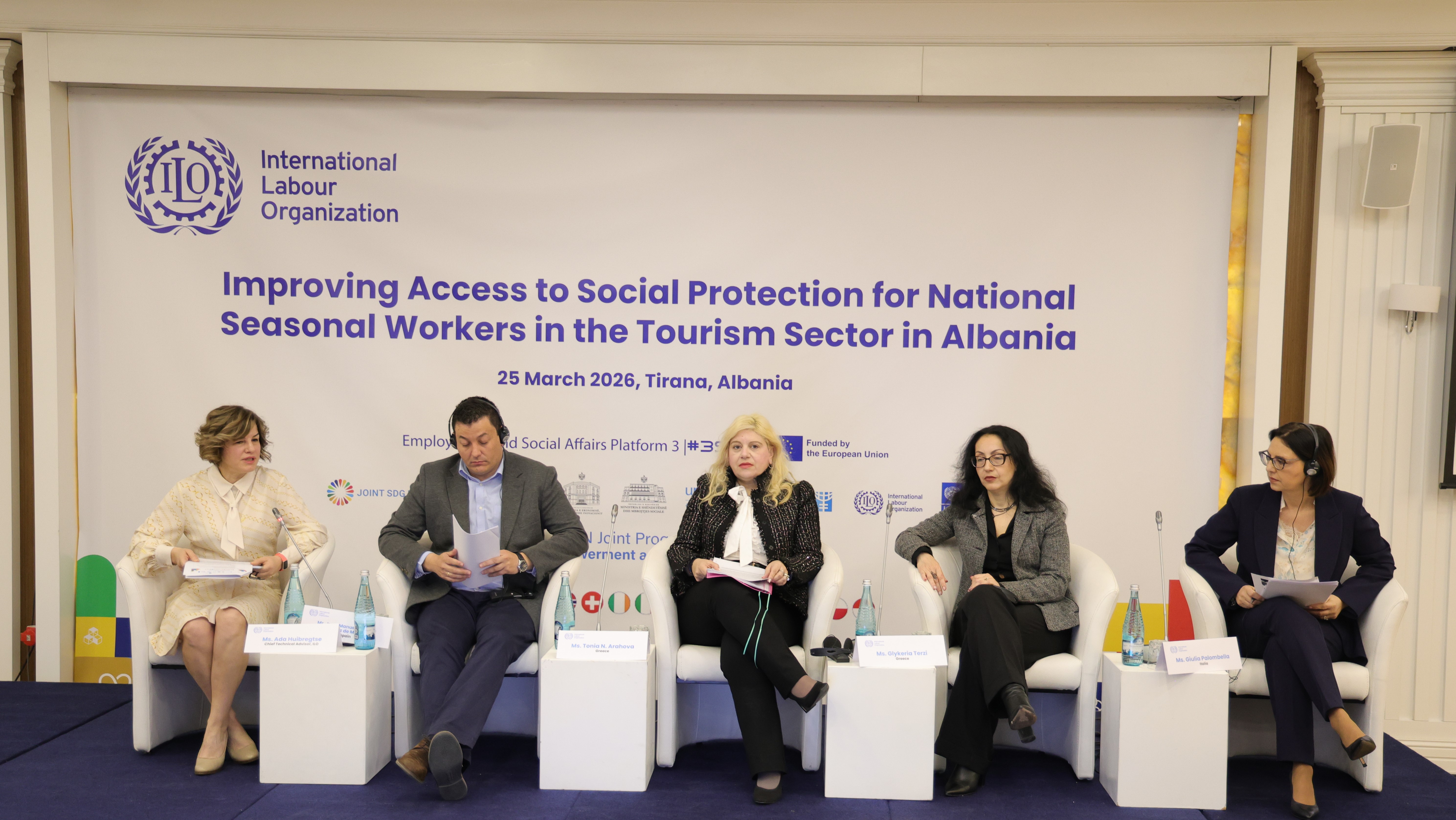
©ILO Representatives of the Greek, Italian and Spanish government institutions present their solutions to social protection of seasonal worker in a high-level meeting in Tirana, 25 March 2025
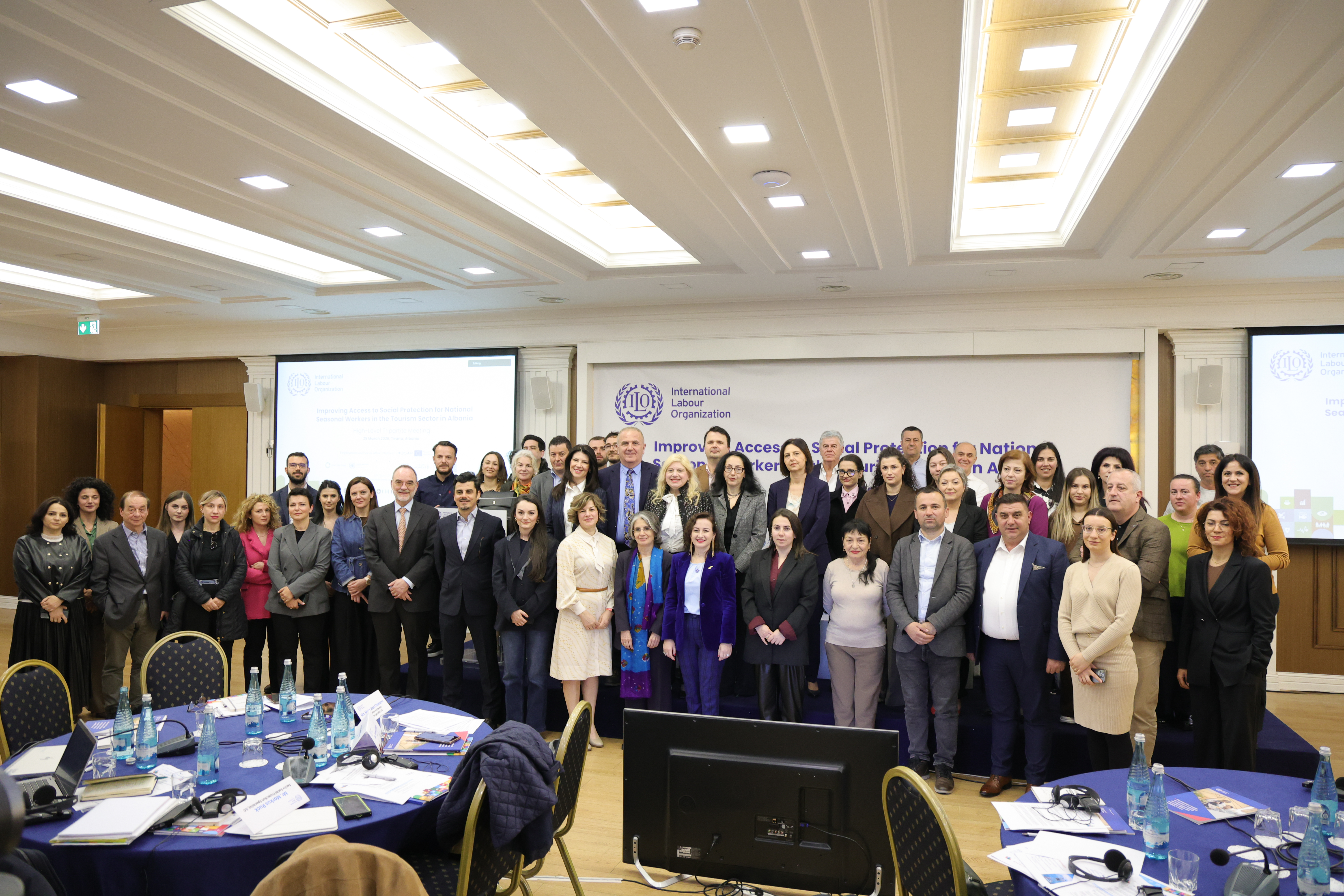
©ILO A high-level meeting in Tirana to discuss extending social protection to seasonal workers, 25 March 2025
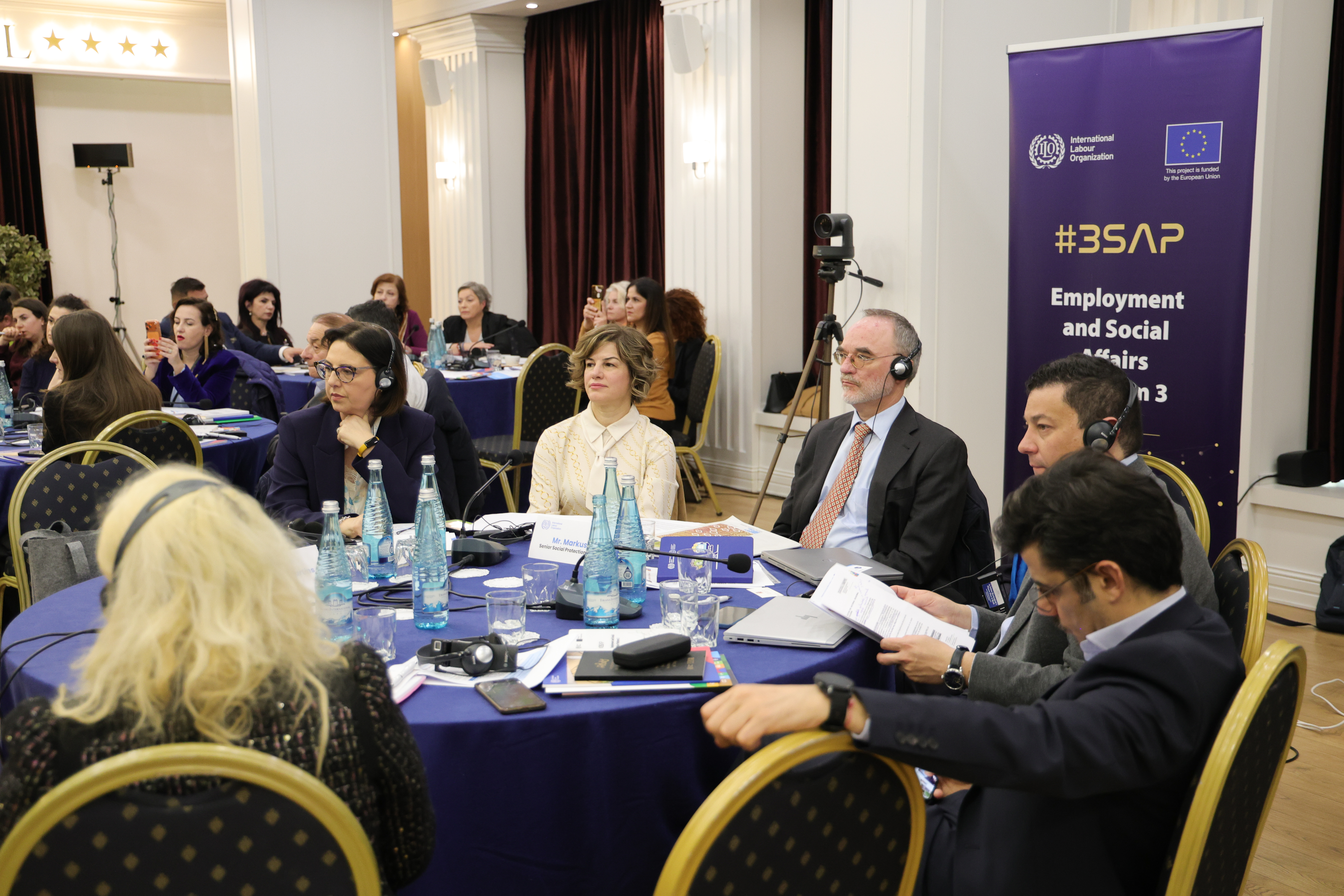
©ILO A high-level meeting in Tirana to discuss extending social protection to seasonal workers, 25 March 2025
Tirana, 25 March 2026 – A High-Level Tripartite Meeting in Tirana brought together around 60 representatives from government, social partners and international experts to advance policy dialogue on improving access to social protection for seasonal workers in Albania’s tourism sector.
The meeting was organized by the International Labour Organization (ILO) within the framework of the EU-funded Employment and Social Affairs Platform (ESAP3), as well as the UN Joint Programme Lifelong Empowerment and Protection in Albania (LEAP), funded by the Joint SDG Fund and implemented by UNDP, UNICEF, ILO and UN Women in partnership with the Government of Albania.
At the centre of the discussion was a new ILO analytical report on social protection of seasonal workers Improving Access to Social Protection for Seasonal Workers: Challenges and Good Practices . The report highlighted a fundamental mismatch between traditional social protection systems designed for stable, full-time employment and the realities of intermittent and short-term seasonal work. As a result, many seasonal workers face barriers to effective access to social protection, including contribution requirements, administrative hurdles, informality, and low awareness of rights.
The analysis emphasized that while legal coverage often exists, workers struggle to qualify for benefits or receive adequate protection due to fragmented careers and low incomes. It pointed to key policy directions, including adapting eligibility rules, simplifying access, improving benefit adequacy, and promoting formalization to better align systems with labour market realities.
Building on this analysis, international experts shared concrete experiences from European countries, illustrating how different systems have addressed similar challenges.
From Greece, Ms. Tonia N. Arahova, Deputy Governor of the Public Employment Service (DYPA), and Ms. Glykeria Terzi, Head of the Unemployment Insurance and Social Policies Directorate (DYPA), presented mechanisms tailored to seasonal workers, including reduced eligibility thresholds for unemployment benefits and a special seasonal allowance for workers who do not qualify for standard schemes. These instruments help bridge income gaps during off-season periods and respond directly to intermittent employment patterns.
From Spain, Mr. Juan Manuel Callejas González de Mendoza, Deputy Director General for Unemployment Benefits at the State Public Employment Service (SEPE), highlighted the role of the fixed-discontinuous contract, which preserves the employment relationship across seasons. This model allows workers to access unemployment benefits during inactive periods while maintaining continuity of rights, supported by contribution rules adapted to seasonal employment.
From Italy, Ms. Giulia Palombella, Head of the Central Directorate for International Relations at the National Social Security Institute (INPS), presented a system combining tailored seasonal contracts, unemployment benefits, and strong labour inspection mechanisms. The Italian approach emphasizes balancing flexibility for employers with safeguards for workers, including rights to re-employment, income protection and enforcement against undeclared work.
From Portugal, Ms. Andreia Carrilho Martins, Senior Policy Officer at the Directorate for Social Security Scheme Design (Institute of Social Security), outlined how seasonal workers are integrated into the general social security system, with adapted contribution rules for short-term contracts and full coverage across key risks. At the same time, the Portuguese experience highlighted trade-offs, particularly for very short-term contracts with more limited benefit coverage.
Across all country experiences, a common element was the use of collective agreements between employers organizations and trade unions as a key tool to address the challenges of seasonality. These agreements help ensure continuity of employment, define working conditions, and strengthen access to social protection, playing a central role in guaranteeing that seasonal workers’ labour rights are effectively realized.
The discussions in Tirana confirmed the relevance of these lessons for Albania, where seasonal employment is a structural feature of the tourism sector. Participants emphasized the need to adapt existing systems to national realities, combining protection for workers with sustainability for businesses.
The meeting marked an important step toward translating analysis and international experience into policy dialogue, with follow-up technical work expected to further assess feasible reform options in close consultation with national stakeholders.